Hereditary Thyroid
Disorders
Risk Panel (NGS)
Turnaround
7–10 Days
Panel Size
47 Genes
Understand inherited risks for thyroid disorders through advanced Next-Generation Sequencing. Identify genetic predispositions, personalize treatment decisions, and support early intervention for improved long-term health outcomes.
What Is Hereditary
Thyroid Testing?
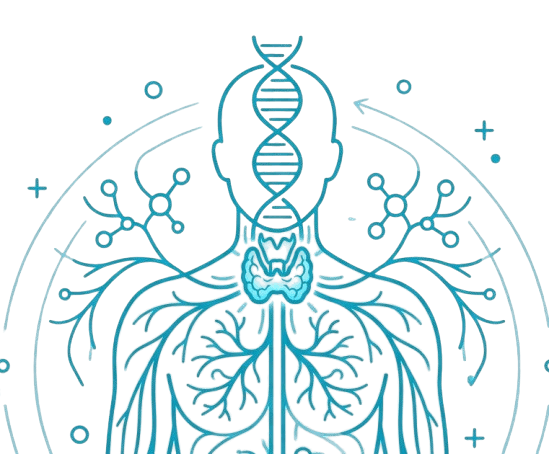
The thyroid gland regulates metabolism, growth, and energy through hormone production. Hereditary thyroid disorders arise when inherited genetic variants disrupt hormone synthesis, receptor signaling, or gland development.
Next-Generation Sequencing enables comprehensive analysis of 47 clinically relevant genes, helping clinicians distinguish congenital hypothyroidism, dyshormonogenesis, hereditary cancer risk, and hormone resistance syndromes — often before irreversible complications develop.
Testing is especially valuable for patients with a family history of thyroid disease, unexplained thyroid dysfunction, pediatric presentations, or those planning reproductive decisions.
What This Test Helps Detect
Thyroid Cancer
Hyperthyroidism
Hypothyroidism
Thyroid Nodules
Familial Goiter
Thyroid Hormone Resistance
Why Genetic Testing
Matters
Early Detection
Identify elevated hereditary risk before symptoms appear, enabling proactive surveillance.
Personalized Treatment
Tailor therapies and monitoring based on each patient's genetic thyroid profile.
Improved Diagnostic Accuracy
Differentiate overlapping thyroid conditions with molecular clarity.
Family Screening
Identify inherited risks in relatives and support informed family planning.
Genetic Conditions Linked to
Thyroid Mutations
Each condition below is associated with specific gene variants identified in our comprehensive panel.
Congenital Hypothyroidism
HighInherited defects in thyroid hormone synthesis or gland development present from birth, requiring early detection and lifelong management.
Hyperthyroidism
ModerateGain-of-function variants in TSH receptor can cause familial hyperthyroidism and Graves-like presentations with elevated thyroid hormone.
Hypothyroidism
ModerateMutations affecting iodine organification and thyroid hormone production lead to reduced thyroid function and metabolic slowing.
Pendred Syndrome
ModerateAutosomal recessive disorder combining sensorineural hearing loss with goiter due to defective iodide transport in the thyroid.
Familial Non-Toxic Goiter
LowMultinodular goiter without hyperthyroidism, often inherited through defects in sodium-iodide symporter or TSH signaling pathways.
Thyroid Hormone Resistance
ModerateReduced tissue responsiveness to thyroid hormone due to THRB mutations, causing elevated TSH with variable clinical hypothyroid features.
Comprehensive 47-Gene
Thyroid Risk Panel
Sample
Buccal Swab / Saliva
Turnaround
7–10 Business Days
Coverage
>96% at 20x
Reporting
Pathogenic + Likely Pathogenic
Gene Panel
47 Clinically Curated Genes
Customization
Custom Gene List Available
Method
Next-Generation Sequencing (NGS)
Positive Result
Roadmap
A structured care pathway when a pathogenic variant is identified — consultative, actionable, and family-centered.
Personalized Treatment Plan
Targeted monitoring and intervention aligned to genetic findings.
Family Risk Identification
Encourage cascade screening for at-risk relatives.
Patient Education
Help patients understand genetic risk and care choices.
Genetic Counseling
Discuss inheritance patterns and future reproductive planning.
Long-Term Monitoring
Prevent complications through ongoing endocrine surveillance.
Who Should Consider
Testing?
Why Choose Preventive Genomics
High-Quality Testing
Next-generation sequencing with >96% coverage at 20x depth across all 47 genes.
Fast Turnaround
Results delivered securely to your provider within 7–10 business days.
Comprehensive Panel
47 clinically curated thyroid genes spanning hormone synthesis, development, and oncology pathways.
Collaborative Approach
Reports designed for immediate clinical action with endocrine specialist coordination.
Understanding Genetic Testing
Genetic testing analyzes your DNA to identify changes in genes, chromosomes, or proteins that may cause or increase the risk of thyroid and other health conditions. For hereditary thyroid disorders, NGS scans 47 endocrine-relevant genes with high clinical sensitivity.
Diagnose Diseases
Confirm molecular diagnoses with precision.
Reproductive Decisions
Inform family planning with genetic clarity.
Disease Risk Prediction
Enable proactive intervention before onset.
Personalized Medicine
Tailor therapy to specific genetic pathways.
Testing Outcomes & Family Benefits
A pathogenic or likely pathogenic mutation is identified. Targeted monitoring, specialist referral, and family screening are recommended.
No pathogenic variants detected within the 47-gene panel. Clinical correlation remains important if suspicion persists.
A variant of uncertain significance (VUS) is identified. Continued observation and periodic re-classification as evidence evolves.
Hereditary thyroid variants can cascade through families — early identification protects generations.
Insurance Coverage & Next Steps
Most commercial insurance plans and Medicare cover hereditary thyroid panels when clinical necessity guidelines are met.
Review Insurance Policy
Check your plan for coverage of hereditary thyroid genetic testing panels.
Consult Healthcare Provider
Your clinician documents clinical necessity to support pre-authorization.
Prior Authorization
Vediagnostics provides comprehensive pre-authorization support.
Protect Your Thyroid Health
with Precision Genetics
Early risk detection can lead to earlier intervention and better outcomes for patients and families.